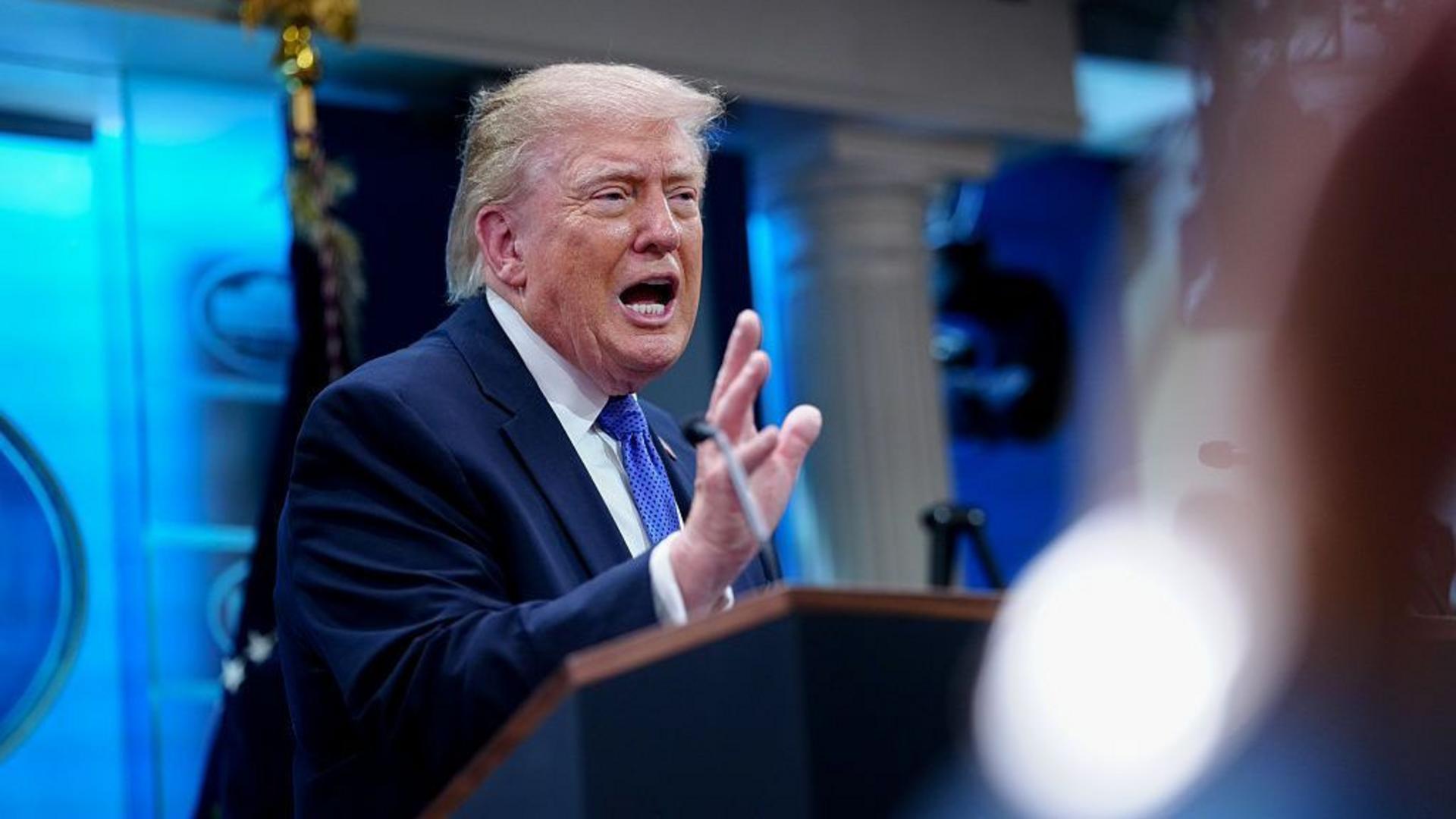
President Trump has said he will not allow American companies to build AI data centres outside the United States, and he has threatened a "tremendous tax" on tech firms that do. The idea is aimed at keeping the infrastructure behind the AI boom on American soil. It is a goal worth taking seriously, but a threat delivered to reporters is not yet a policy, and the report makes clear that even his own cabinet heard the idea for the first time.
The core argument is easy to understand. Trump said the US is leading on data centre construction and should not let China win the race to what he calls super intelligence, or SI. He tied the idea to a new rule requiring firms to hold a licence before buying advanced chips, which lets officials check whether those chips are serving Chinese companies or being smuggled into China. Those are real security concerns. Yet the report also notes that it remains unclear how a ban on overseas builds would be enforced, and that Meta and Google have already signed agreements to build abroad.
The political backdrop matters too. Data centres were a central issue in the midterm elections, and Democratic candidates who promised tougher rules on construction won on 3 November. The report cites concerns about noise pollution and energy use, particularly in rural areas, where about 3,000 data centres already operate across the US. Trump's own remark that communities should "make them pay" rather than "shut them off" points to a middle path that his threat does not spell out. Local costs and benefits deserve a serious debate, and a blanket ban would not settle them.
The report also shows what happens when companies look elsewhere. Canada has moved to position itself as an alternative, with Meta breaking ground in Alberta and Anthropic signing a long-term lease for a proposed site in Nova Scotia. Google's €13bn investment in Finland, which included three data centres, has itself run into trouble, with work on two of them halted over the clearance of more than 300 hectares of forest. Trump singled out that Finnish project, but the episode suggests that overseas expansion carries environmental and local risks of its own.
My view is that the goal of keeping AI infrastructure and its jobs in America is sound, but a tax threat without published rules is not a strategy. Washington should set out clear, enforceable terms, explain how they would be monitored, and work with local communities so that data centres bring paid-for energy, water and tax benefits to the places that host them. Until those details exist, companies will be left guessing, and the country will have an announcement rather than a plan.